- No. 45 N20 Road, Long Phuoc Ward, Ho Chi Minh City
- Admin@CTCinternimex.com



- Gợi ý từ khóa:
Export agricultural products, wood export, coffee export, …


Dried Pho Noodles Sourcing: 6 Proven Buyer Steps
Dried pho noodles have become one of the fastest-growing categories in the international gluten-free and Asian-cuisine segment, moving well beyond specialty grocery aisles into mainstream retail, food service distribution, and private-label programs across North America, Europe, and Australia. Import teams building or expanding a noodle program now face a genuinely wider field of Vietnamese manufacturers than they did five years ago, which creates real opportunity — and real risk of choosing the wrong partner.
Unlike a domestic reorder, sourcing dried pho noodles internationally means the buyer rarely sees the factory floor, rarely meets the quality team in person, and often makes a first commitment based on a data sheet and a handful of samples. The buyers who consistently get this right are not necessarily negotiating the lowest price — they are following a repeatable process for evaluating, testing, and scaling a new supplier relationship before committing full container volumes.
This guide walks through that process as six sequential steps, written specifically for procurement teams sourcing dried pho noodles for retail, food service, or private-label distribution — not for home cooks looking for a recipe.
The category's growth has structural roots rather than being a passing trend. Retail chains continue expanding dedicated ethnic-foods and free-from sections, while food service operators add noodle soup and stir-fry concepts to menus as a low-cost way to diversify offerings without specialized kitchen equipment. Private-label brands, meanwhile, have identified dried pho noodles as an attractive category for building out plant-based and allergen-friendly product lines under their own retail SKUs. That combined demand has drawn a wider range of manufacturing candidates into the export market, from long-established factories with decades of shipping history to newer entrants still building out laboratory infrastructure and export documentation capacity.
A wider supplier pool generally benefits buyers through more competitive pricing, but it also introduces meaningfully more variance in operational maturity from one factory to the next. Experienced import managers tend to approach a new dried pho noodles supplier the way a credit analyst approaches a new borrower — by separating claims from evidence rather than taking a polished product catalog at face value. The six steps below are organized specifically around that discipline.
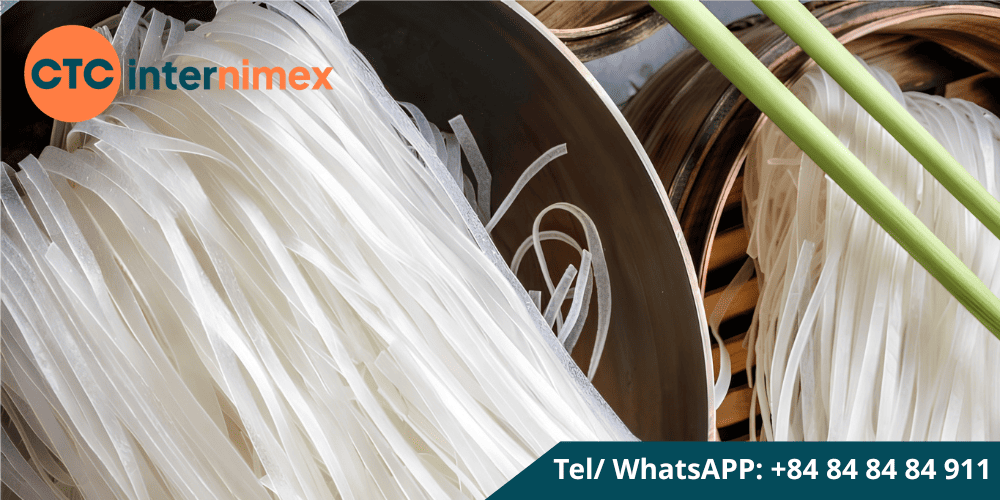
Step 1: Pre-Qualify the Manufacturing Partner Before Requesting a Quote
The single biggest mistake first-time buyers make is requesting a price quote for dried pho noodles before confirming a manufacturer even meets baseline qualification standards. Pricing conversations move quickly once they start, and buyers who skip pre-qualification often find themselves negotiating hard on a factory that was never a serious candidate to begin with.
Before requesting a formal quote for dried pho noodles, confirm the following directly, ideally with documentation rather than a verbal assurance:
- Active ISO 22000, HACCP, or BRCGS certification, verified with the certifying body rather than a supplier-provided PDF
- Dedicated, allergen-isolated production lines if gluten-free claims will appear on the label
- Export history into your specific destination market, including references from existing clients
- Production capacity sufficient for your expected order volume without over-committing the factory's schedule
A factory that hesitates to share certification numbers, client references, or basic capacity figures during this stage is signaling exactly the kind of due-diligence risk that tends to resurface later in the relationship.
International guidance bodies, including the Codex Alimentarius Commission, publish general food safety standards that buyers can reference when building an internal pre-qualification checklist for categories like dried pho noodles.
Step 2: Request and Properly Evaluate Physical Samples
Once a manufacturer clears pre-qualification, the next step is a structured sample evaluation — not a single package tasted informally by one team member. Dried pho noodles need to be assessed across several dimensions that a data sheet alone cannot capture: rehydration time, strand elasticity, broth absorption, and residual starch release in hot water.
A thorough sample evaluation for dried pho noodles should include:
- Cooking performance testing — rehydration time, elasticity after cooking, and resistance to overcooking during extended hold times
- Visual inspection — strand uniformity, translucency, and absence of discoloration across the sample batch
- Moisture verification — an independent lab test rather than relying solely on the factory's certificate
- Samples from more than one production date, since a single curated sample rarely reflects ongoing production consistency
Buyers who evaluate only one sample, chosen and shipped directly by the sales team, are effectively evaluating the factory's best-case scenario rather than its typical output.
This step is also the right moment to ask how the factory manages moisture equilibrium and starch gelatinization across seasonal humidity changes, since raw paddy rice arriving during monsoon periods behaves differently in processing than dry-season grain. A supplier who cannot explain this clearly has likely not standardized its process to the degree a bulk buyer of dried pho noodles requires.
It is also worth asking how a factory responds when a quality deviation is discovered internally, before a shipment ever leaves the warehouse. Manufacturers with mature quality systems typically maintain documented deviation logs and corrective action procedures for dried pho noodles production, rather than treating an out-of-spec batch as an isolated, undocumented event. A supplier able to walk a buyer through a recent example of catching and correcting a quality issue is demonstrating exactly the process discipline that prevents larger problems from reaching a full container.
Step 3: Negotiate Contract Terms and Payment Structure
With sample evaluation complete, contract negotiation for dried pho noodles should address more than unit price. Currency exposure, payment terms, and remedy clauses for out-of-spec shipments all deserve explicit attention before a deposit is wired.
Key negotiation points worth addressing directly:
- Payment structure — a buyer paying 100 percent in advance carries meaningfully more risk than one using a Letter of Credit at sight or a Documents Against Payment arrangement through recognized banking channels
- Pricing structure — fixed multi-quarter pricing offers planning certainty, while pricing tied to a raw material index shifts more risk onto the buyer during commodity spikes
- Remedy clauses — which party bears re-testing costs, what documentation triggers a claim, and whether remedies take the form of a price adjustment, replacement shipment, or credit toward a future order
Contracts that leave remedy language vague tend to put the buyer in a weak negotiating position exactly when a shipment problem occurs and leverage matters most.
Reluctance from a supplier to work within standard international trade finance instruments is itself worth investigating, since established exporters of dried pho noodles are generally comfortable operating within these frameworks.
Step 4: Monitor Production and Quality Checkpoints
Once a purchase order is confirmed, the buyer's job is not finished — it shifts from evaluation to monitoring. Reliable Vietnamese manufacturers of dried pho noodles typically support a three-tier inspection protocol covering raw material intake, in-process quality checks, and final container loading, and buyers should ask to see evidence of each stage rather than assuming it happens.
Practical monitoring steps include:
- Requesting a pre-shipment inspection report from an independent third-party agency before the container is sealed
- Confirming batch-level traceability documentation, including digital batch codes linking milling, steaming, and drying records
- Reviewing Certificates of Analysis tied to the exact production batch, not a generic annual average
- Asking whether retained physical reference samples are archived, and for how long, in case a comparative lab analysis is needed later
Traceability gaps in dried pho noodles sourcing rarely surface during the honeymoon phase of a new supplier relationship — they surface during the first customer complaint, when the paperwork suddenly matters.
Buyers managing multi-container annual contracts benefit from asking whether the manufacturer offers digital client portals for real-time production status, since this kind of visibility substantially reduces the anxiety that traditionally accompanies long-lead-time international orders.
Digital infrastructure has quickly become table stakes rather than a differentiator in dried pho noodles sourcing. Order management platforms that let buyers track production status in real time — raw material intake, steaming, drying, or pre-shipment inspection — replace the periodic email updates that traditionally characterized international sourcing relationships. Automated generation of commercial invoices, packing lists, and certificates of origin further reduces the clerical errors that can delay customs clearance for a container of dried pho noodles at the destination port.

Step 5: Plan Packaging and Logistics for Ocean Freight
Even a technically excellent batch of dried pho noodles can arrive damaged if packaging and logistics planning for the shipment are treated as an afterthought. Ocean freight routes crossing tropical latitudes expose cargo to humidity swings, condensation, and repeated mechanical stress from stacking over several weeks at sea.
Before finalizing a packaging specification, confirm:
- Outer cartons are rated for the correct Edge Crush Test performance for the planned stacking configuration
- Primary packaging films offer sufficiently low water vapor transmission rates to prevent moisture migration
- The exact carton configuration has passed drop-test and compression-test evaluation, not just a generic packaging claim
- Container desiccants are installed to manage in-transit humidity spikes
A supplier quoting an aggressively low price while cutting corners on packaging materials is often shifting cost risk onto the buyer in the form of broken strands, dusty carton bases, and rejected pallets at destination. Buyers who have previously received damaged dried pho noodles shipments frequently trace the root cause back to under-specified corrugated board or missing desiccants — both inexpensive to correct at the specification stage.
Step 6: Conduct a Post-Delivery Review and Build the Long-Term Relationship
The final step is the one most first-time buyers skip entirely: a structured review after the container arrives, rather than moving straight to the next purchase order. This review should compare actual moisture readings, cooking performance, and packaging condition against the specifications agreed at contract signing.
A useful post-delivery review for dried pho noodles covers:
- Whether cooked texture and rehydration time matched pre-shipment sample results
- Whether packaging arrived intact, with no evidence of moisture migration or carton collapse
- Whether documentation — Certificates of Analysis, Phytosanitary Certificates, Certificates of Origin — arrived complete and accurate
- Whether the supplier's communication remained proactive throughout production and shipping, not just during the sales process
Suppliers who welcome this level of ongoing transparency tend to be the same suppliers capable of sustaining consistent quality across years of partnership, rather than only during the initial evaluation window.
Buyers who build this review into every order cycle create an internal record that makes contract renewal negotiations far more evidence-based than relying purely on informal impressions carried forward from the original onboarding process.
This review is also the natural point at which a transactional supplier relationship either matures into a genuine partnership or reveals itself as a one-off transaction. Forward-thinking manufacturers of dried pho noodles increasingly position themselves as an extension of the buyer's own supply chain — proactively flagging potential disruptions, suggesting packaging or logistics adjustments based on market feedback, and adapting production schedules to match seasonal demand patterns in the destination market. A supplier that engages this way during a post-delivery review is signaling the operational maturity that matters far more over a multi-year relationship than any single competitive quote.
Putting the Six Steps Together
Bringing this process together, a resilient sourcing program for dried pho noodles moves through pre-qualification, structured sample evaluation, careful contract negotiation, active production monitoring, deliberate packaging and logistics planning, and a disciplined post-delivery review — repeated and refined with every order cycle.
- Pre-qualify before requesting pricing
- Test samples from multiple production dates, not one curated batch
- Negotiate payment terms and remedy clauses explicitly
- Monitor production with independent verification, not just trust
- Plan packaging for humidity and mechanical stress on long ocean voyages
- Review every delivery and use the findings to strengthen the next contract
Treating this as a repeatable six-step process — rather than a series of disconnected transactions — is what separates buyers who build resilient dried pho noodles supply chains from those who experience recurring disruption.
Frequently Asked Questions
How long should the pre-qualification stage take before requesting a sample? Most experienced buyers complete pre-qualification within one to two weeks, since it primarily involves verifying documentation the supplier should already have on hand. A factory that takes significantly longer to produce certification numbers or client references is often signaling deeper organizational gaps.
Is it reasonable to request a factory visit before signing a contract? Yes, and most established manufacturers expect it. A physical or video-based walkthrough of milling, steaming, slitting, drying, and packaging lines reveals operational details that no data sheet can fully convey.
Suppliers who resist reasonable visit requests, absent a legitimate scheduling constraint, should be treated as a caution flag rather than dismissed outright.
Should a first order be small, or is that overly cautious? A smaller trial order of dried pho noodles is standard practice, not excessive caution. It functions less as a purchase and more as an audition, allowing a buyer to validate real-world consistency, documentation accuracy, and communication responsiveness before committing to full-container volumes.
How much weight should certifications carry versus actual audit findings? Certifications such as ISO 22000, HACCP, and BRCGS are a useful screening filter, but they represent a point-in-time assessment rather than an ongoing guarantee. Pairing certification review with periodic audit findings and a supplier's willingness to share corrective action reports gives a far more complete picture of ongoing operational discipline than certification status alone.
What should happen if a container of dried pho noodles arrives out of specification? This should be defined contractually before the first shipment, not negotiated after a problem surfaces. Well-structured contracts specify which party bears the cost of independent re-testing, what documentation is required to trigger a claim, and whether remedies take the form of a price adjustment, replacement shipment, or credit against a future order. Buyers who leave this section vague in the master agreement frequently find themselves in a weak negotiating position exactly when they can least afford it.
Conclusion
Dried pho noodles represent a genuine growth opportunity for import businesses positioned to serve the expanding gluten-free and Asian-cuisine categories, but the commercial upside depends entirely on following a disciplined, repeatable process rather than treating each purchase order as an isolated transaction. Buyers who work through pre-qualification, sample evaluation, contract negotiation, production monitoring, logistics planning, and post-delivery review — in that order, every time — are far better positioned to build a stable, long-term dried pho noodles supply chain.
Global trade conditions remain in a state of ongoing recalibration, and buyers who apply a structured process rather than defaulting to price-only comparisons are the ones best positioned to navigate that volatility successfully.
Vietnam's position as a preferred origin for dried pho noodles reflects decades of investment in agricultural infrastructure, an export-oriented manufacturing base, and a network of free trade agreements — including EVFTA, CPTPP, and RCEP — that meaningfully reduce tariff exposure for buyers compared with sourcing from origins without equivalent trade access. That structural advantage, combined with a disciplined six-step evaluation process, gives import teams a genuine basis for confidence when building a new dried pho noodles supply chain rather than simply hoping a low quote translates into a reliable partnership.
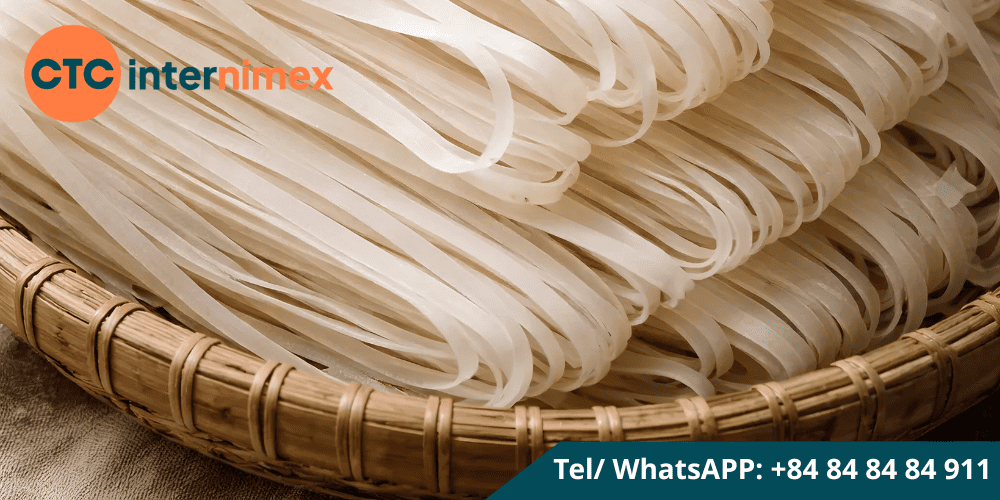
Partner With a Supplier Built for This Process
CTC Internimex JSC has structured its export operations around exactly the standards this six-step process recommends verifying — from independently confirmed moisture control and full batch-level traceability, to certified hygiene protocols and export-grade packaging engineered for long-haul ocean freight. Rather than vetting an unfamiliar factory from scratch, import teams can work with a partner that already meets every checkpoint outlined above.
Contact our international export desk today to request product samples, a full technical dossier, and a wholesale quotation for your next shipment of dried pho noodles.

Admin
 Dried Pho Noodles Sourcing: 6 Proven Buyer Steps
Admin
https://pos.nvncdn.com/f50e22-177505/store/20250801_V0TB7mvV.png?v=1754041486
Dried Pho Noodles Sourcing: 6 Proven Buyer Steps
Dried pho noodles sourcing doesn't have to be a gamble. Follow these 6 proven steps to vet, order, and scale with a reliable Vietnamese supplier.
Chia sẻ:
Bài viết mới nhất




Bình luận