- No. 45 N20 Road, Long Phuoc Ward, Ho Chi Minh City
- Admin@CTCinternimex.com



- Gợi ý từ khóa:
Export agricultural products, wood export, coffee export, …


Export Standards For Dried Rice Vermicelli: 5 Key Factors You Need To Know
In recent years, Vietnamese dried rice vermicelli has emerged as a strong export commodity, popular in major markets such as the U.S., EU, South Korea, Japan, and the Middle East. With an abundant rice supply, increasingly modern production processes, and a distinctive traditional flavor, dried rice vermicelli is gradually affirming Vietnam’s position on the global food map.
However, for products to clear customs smoothly and maintain a sustainable presence, exporters must fully comply with export standards for dried rice vermicelli. Below are the 5 most important factors that manufacturers and exporters should never overlook.
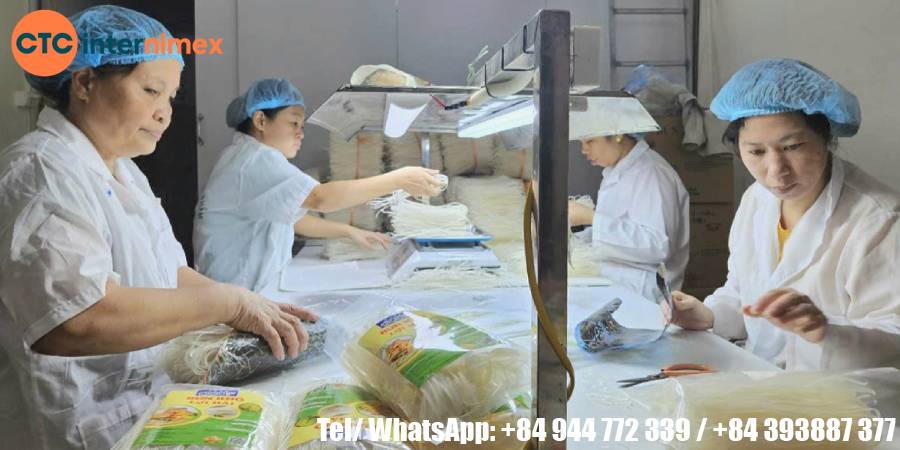
1. Raw Materials – The Foundation of Product Quality
Rice accounts for nearly 90% of dried rice vermicelli, making raw material quality decisive for both taste and food safety.
- Clear origin: rice must come from certified cultivation areas (VietGAP, GlobalGAP, or Organic).
- No chemical residues: rice must meet safety limits for pesticides, heavy metals, and aflatoxins.
- Purity guaranteed: no mixing of inferior rice, no use of industrial colorants or flavor enhancers.
For strict markets such as the EU and the U.S., pesticide residue inspections are particularly stringent, making high-quality raw materials the first condition for entry.
2. Production Process – Compliance with International Standards
To meet global food safety requirements, dried rice vermicelli factories must ensure:
- Quality management systems: HACCP, ISO 22000, or FSSC 22000 certifications.
- Closed production line: from soaking, grinding, filtering, pressing, drying to packaging must be strictly controlled for temperature and humidity.
- Modern technology: automated drying and packaging systems extend shelf life from 12–24 months.
Such certifications not only help products pass technical barriers but also enhance brand image and create opportunities with major international buyers.
3. Technical Specifications – Guaranteeing Product Consistency
Maintaining stable technical indicators is a crucial requirement in exporting dried rice vermicelli:
- Moisture content: < 14% to prevent mold during long-distance shipping.
- Texture & clarity: noodles must retain elasticity when cooked, not break easily.
- Appearance: natural ivory white, not yellowish or gray.
- Microbiological safety: free from E. coli, Salmonella, and harmful bacteria.
These specifications are often listed in the Certificate of Analysis (COA) issued by independent laboratories, a document highly valued by international importers.
4. Packaging & Labeling – Convincing the Market
Packaging not only preserves products but also represents the brand in global markets.
- Materials: export-standard packaging such as moisture-proof PE/PP bags and sturdy cartons for sea freight.
- Design: clear, attractive, and reflective of Vietnamese culinary culture.
- Label information: must include ingredients, net weight, production date, expiry date, cooking instructions, manufacturer’s name and address.
- Language: English or as required by the importing market.
- Traceability: QR codes printed on packaging for transparency and consumer trust.
Well-designed, compliant packaging helps gain acceptance in international supermarkets and creates a competitive edge on retail shelves.
5. Certifications & Export Documents – The “Passport” of the Product
For a shipment of dried rice vermicelli to clear customs, exporters must prepare:
- Health Certificate (food safety).
- Phytosanitary Certificate (if required by the importing country).
- Certificate of Origin (CO): critical to enjoy tariff preferences under FTAs such as EVFTA and CPTPP.
- COA (Certificate of Analysis): verifying product specifications.
Having complete and accurate documentation prevents delays at ports and builds trust for long-term partnerships.
6. Market Trends & Export Potential of Vietnamese Dried Rice Vermicelli
Statistics show that Vietnam’s exports of rice-based products, including dried vermicelli, grow on average 10–15% annually, thanks to rising global demand for gluten-free and healthy foods. Key potential markets include:
- U.S. & EU: prefer low-fat, naturally starchy foods.
- Asia-Pacific: high consumption as rice noodles are a common ingredient.
- Middle East: strong demand for packaged, long-lasting food products suitable for long-distance shipping.
To successfully export dried rice vermicelli, businesses must focus on five factors: raw materials – production process – technical specifications – packaging – certifications. These are the keys to overcoming technical barriers while building brand credibility and strengthening Vietnam’s position in the global marketplace.
With thorough preparation and a clear strategy, dried rice vermicelli can undoubtedly become one of Vietnam’s core export products, bringing Vietnamese cuisine closer to the world.
CTC Internimex - The Bridge for Vietnamese Produce to the World
In the journey of bringing Vietnamese vegetables to the world, the role of reputable export companies is essential. CTC Internimex is a pioneer in this field, serving as a reliable bridge that connects high-quality Vietnamese produce with demanding international markets.
- Professional and Reputable: With years of experience, CTC Internimex is committed to providing products that meet international standards, from sourcing and packaging to transportation. They are a trusted Vietnamese food exporter.
- Diverse Product Portfolio: The company exports a wide variety of vegetables and fruits, meeting the diverse needs of the market. They are known for their Vietnamese fruit export.
- Partnering with Farmers: CTC Internimex continuously supports local farmers, building sustainable farming regions and ensuring quality from the source. They are a key player in Vietnam agriculture export.
The growth of the Vietnamese vegetable export industry is a testament to the tireless efforts of both farmers and businesses. With the support of companies like CTC Internimex, Vietnamese produce will continue to affirm its position, bringing greater value to the nation's agriculture.
👉 Now is the time for Vietnam’s agriculture sector to accelerate and achieve even greater milestones.
Read more:
CTC International Import Export Joint Stock Company (CTC Internimex JSC) is a company specializing in the processing, production, and export of agricultural and forestry products from Vietnam to all over the world.
With nearly 20 years of experience in manufacturing and trading, we are committed to providing you with:
- The best quality products to meet all technical requirements.
- Quality assurance as per your requirements, with third-party inspections by SGS, Vinacontrol, Intertek, etc.
- The best prices.
- Optimized transportation costs and safe cargo through the use of reliable and experienced freight forwarders.
- Diverse shipping methods (EXW, FOB, CNF, CIF, DDP, etc.)
- Various payment methods (TT, L/C, etc.)
👉👉 We update the prices of various agricultural products every Monday.
You can refer to them at this link: Vietnam Agri-Exports: Weekly Price Updates
*** If you need to learn more about any specific product, please contact us right away. We are ready to assist you whenever you need us.
✨Big Promotion From Ctc Internimex Jsc For You 🌏✨
Partner With Ctc Internimex Jsc And Receive Even More Special Offers:
🍀 Free Sample
🍀 We Will Help You Get Import Tax Exemption
🍀 Oem Processing / Custom Design
🍀 Cheap Shipping👉👉 More details here: Big promotion from CTC internimex JSC for you
Contact our team of experts today for assistance with product information, competitive pricing, and logistics solutions for Vietnamese agricultural products.
Contact Information:
- Head office: No. 2 Street 623D, Phuoc Long B Ward, Thu Duc City, HCMC, Vietnam
- Hotline/WhatsApp: (+84) 944 772 339 / (+84) 393 887 377
- Email: Admin@CTCinternimex.com
- Search on Google Maps: Here

Admin
 Export Standards For Dried Rice Vermicelli: 5 Key Factors You Need To Know
Admin
https://pos.nvncdn.com/f50e22-177505/store/20250801_V0TB7mvV.png?v=1754041486
Export Standards For Dried Rice Vermicelli: 5 Key Factors You Need To Know
Discover 5 key standards for exporting Vietnamese dried rice vermicelli, from raw materials, production processes, and technical specifications to packaging and international certifications, helping businesses conquer global markets.
Chia sẻ:
Bài viết mới nhất




Bình luận