- No. 45 N20 Road, Long Phuoc Ward, Ho Chi Minh City
- Admin@CTCinternimex.com



- Gợi ý từ khóa:
Export agricultural products, wood export, coffee export, …


International Standard Packaging Process For Exporting Fresh Vegetables And Fruits
1. The importance of packaging in fruit and vegetable exports
In the global supply chain, packaging serves as the “protective shield” for fresh produce by:
- Preserving freshness and nutritional value during long-distance transportation.
- Meeting international food safety standards, avoiding rejection or import bans.
- Enhancing competitiveness, branding, and product value in demanding markets such as the EU, US, Japan, South Korea, and the Middle East.
According to the Food and Agriculture Organization (FAO), post-harvest losses of fruits and vegetables can reach 30–40% without proper packaging, handling, and preservation.
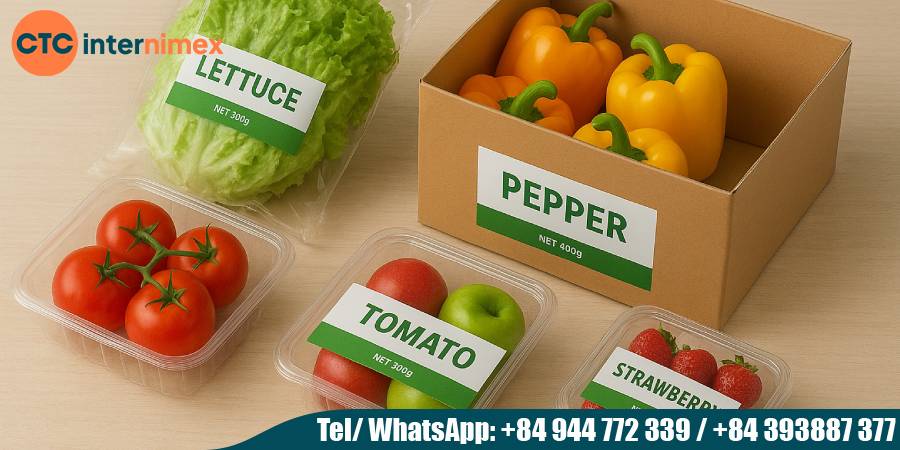
2. Standard international packaging process for fruits and vegetables
🔹 Step 1: Proper harvesting
- Harvest at the right maturity stage for optimal quality.
- Use specialized cutting tools to avoid bruising.
- Prevent direct sunlight exposure and transport immediately to the processing facility.
🔹 Step 2: Cleaning and pre-processing
- Remove old leaves, soil, and damaged parts.
- Wash with circulating water, ozone, or food-safe chlorine solutions.
- Air-dry or use cold-air blowers to minimize mold growth.
🔹 Step 3: Grading and quality control
- Sort by size, color, weight, and ripeness.
- Eliminate produce with pests, scratches, or pesticide residues above limits.
- Apply scanning and sensor-based inspection to ensure consistency.
🔹 Step 4: Post-harvest treatments
- Irradiation: eliminates insects, extends shelf life (applied to mangoes, lychees, longans).
- Vapor Heat Treatment (VHT): prevents fungal infections, required by Japan and South Korea.
- Pre-cooling: rapidly lowers produce temperature from 25–30°C to 2–10°C within 4–6 hours.
🔹 Step 5: Packaging in specialized materials
- Use carton boxes, PET trays, or Modified Atmosphere Packaging (MAP) bags with ventilation holes.
- Materials must be eco-friendly, certified by HACCP, ISO 22000, and GlobalGAP.
Labeling must include:
- Product name, country of origin.
- Net weight, packing date.
- Plantation Code and Packing House Code.
- QR codes for full traceability.
🔹 Step 6: Cold storage and international logistics
- Store at 2–8°C cold rooms or as required for specific produce.
- Use reefer containers with automated temperature and humidity controls.
- Maintain an unbroken cold chain from farm to consumer.
3. International requirements for packaging and labeling
Each importing market has its own standards, but most require:
- Food safety compliance: no use of low-grade recycled packaging.
- Durability: moisture-proof, breathable, and strong enough for transport.
- Traceability: QR codes, blockchain, certified plantation and packing codes.
- Eco-friendly standards: biodegradable and recyclable materials encouraged.
Examples:
- EU: Packaging must comply with Regulation (EC) No. 1935/2004 on food contact safety.
- US: FDA strictly regulates pesticide residues and labeling.
- Japan: Mandatory Plant Quarantine Service (PQS) inspections.
4. Current trends in fruit and vegetable export packaging
- Eco-friendly packaging: replacing plastic with biodegradable materials.
- Smart packaging: integrated sensors monitoring temperature and humidity.
- Digital traceability: blockchain and QR codes ensure transparency.
- Premium branding: packaging as a marketing tool to enhance product value.
5. Benefits of complying with international packaging standards
✅ Reduce post-harvest losses and increase profits.
✅ Enhance product value and compete with leading exporters.
✅ Meet strict import requirements, avoiding rejection risks.
✅ Strengthen Vietnam’s agricultural brand reputation worldwide.
Packaging fresh fruits and vegetables for export is not only a technical requirement but also a strategic investment in enhancing Vietnam’s agricultural value. Businesses must apply modern technologies and comply with international standards to remain competitive in global trade.
CTC Internimex - The Bridge for Vietnamese Produce to the World
In the journey of bringing Vietnamese vegetables to the world, the role of reputable export companies is essential. CTC Internimex is a pioneer in this field, serving as a reliable bridge that connects high-quality Vietnamese produce with demanding international markets.
- Professional and Reputable: With years of experience, CTC Internimex is committed to providing products that meet international standards, from sourcing and packaging to transportation. They are a trusted Vietnamese food exporter.
- Diverse Product Portfolio: The company exports a wide variety of vegetables and fruits, meeting the diverse needs of the market. They are known for their Vietnamese fruit export.
- Partnering with Farmers: CTC Internimex continuously supports local farmers, building sustainable farming regions and ensuring quality from the source. They are a key player in Vietnam agriculture export.
The growth of the Vietnamese vegetable export industry is a testament to the tireless efforts of both farmers and businesses. With the support of companies like CTC Internimex, Vietnamese produce will continue to affirm its position, bringing greater value to the nation's agriculture.
👉 Now is the time for Vietnam’s agriculture sector to accelerate and achieve even greater milestones.
Read more:
CTC International Import Export Joint Stock Company (CTC Internimex JSC) is a company specializing in the processing, production, and export of agricultural and forestry products from Vietnam to all over the world.
With nearly 20 years of experience in manufacturing and trading, we are committed to providing you with:
- The best quality products to meet all technical requirements.
- Quality assurance as per your requirements, with third-party inspections by SGS, Vinacontrol, Intertek, etc.
- The best prices.
- Optimized transportation costs and safe cargo through the use of reliable and experienced freight forwarders.
- Diverse shipping methods (EXW, FOB, CNF, CIF, DDP, etc.)
- Various payment methods (TT, L/C, etc.)
👉👉 We update the prices of various agricultural products every Monday.
You can refer to them at this link: Vietnam Agri-Exports: Weekly Price Updates
*** If you need to learn more about any specific product, please contact us right away. We are ready to assist you whenever you need us.
✨Big Promotion From Ctc Internimex Jsc For You 🌏✨
Partner With Ctc Internimex Jsc And Receive Even More Special Offers:
🍀 Free Sample
🍀 We Will Help You Get Import Tax Exemption
🍀 Oem Processing / Custom Design
🍀 Cheap Shipping👉👉 More details here: Big promotion from CTC internimex JSC for you
Contact our team of experts today for assistance with product information, competitive pricing, and logistics solutions for Vietnamese agricultural products.
Contact Information:
- Head office: No. 2 Street 623D, Phuoc Long B Ward, Thu Duc City, HCMC, Vietnam
- Hotline/WhatsApp: (+84) 944 772 339 / (+84) 393 887 377
- Email: Admin@CTCinternimex.com
- Search on Google Maps: Here

Admin
 International Standard Packaging Process For Exporting Fresh Vegetables And Fruits
Admin
https://pos.nvncdn.com/f50e22-177505/store/20250801_V0TB7mvV.png?v=1754041486
International Standard Packaging Process For Exporting Fresh Vegetables And Fruits
Discover the international-standard packaging process for exporting fresh vegetables and fruits: keeping produce fresh, safe, and compliant with EU, US, and Japan requirements while boosting Vietnam’s agricultural value.
Chia sẻ:
Bài viết mới nhất




Bình luận