- No. 45 N20 Road, Long Phuoc Ward, Ho Chi Minh City
- Admin@CTCinternimex.com



- Gợi ý từ khóa:
Export agricultural products, wood export, coffee export, …


The Gold Standard of Purity: How AI-Driven Color Sorting is Transforming Bulk Rice Exports
In the high-stakes world of global commodities, "quality" is a variable, but "purity" is a mandate. For international rice importers, wholesale distributors, and food processing conglomerates, a single contaminated shipment can result in massive financial losses, legal hurdles, and irreversible brand damage.
As we navigate the trade landscape of 2026, the industry is witnessing a technological pivot. Traditional mechanical cleaning is being superseded by AI-driven optical color sorting, a technology that ensures 100% purity from the paddy to the final port of destination.
The Purity Gap in Bulk Rice Shipments
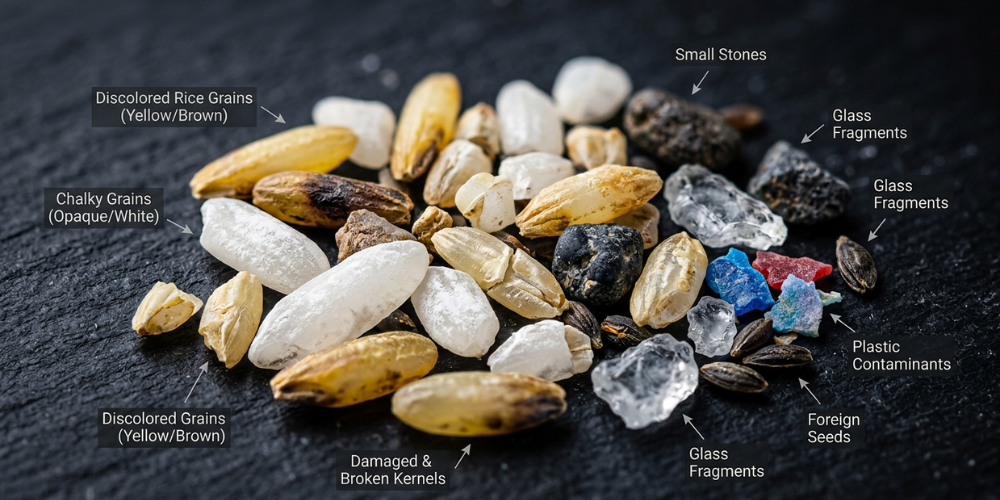
Transporting thousands of tons of Long Grain White Rice, Jasmine, or Basmati presents a unique challenge: consistency. Even the most sophisticated mechanical sills cannot detect subtle defects that human inspectors might miss. Common "deal-breakers" in bulk rice trade include:
- Aesthetic Defects: Chalky grains, yellowing, or "peck" damage.
- Safety Hazards: Micro-fragments of glass, stones, or high-density plastic.
- Cross-Contamination: Seeds from other varieties or organic debris.
For a procurement officer, these aren't just defects—they are risks to customs clearance and shelf-life stability.
Precision at Scale: The AI Advantage
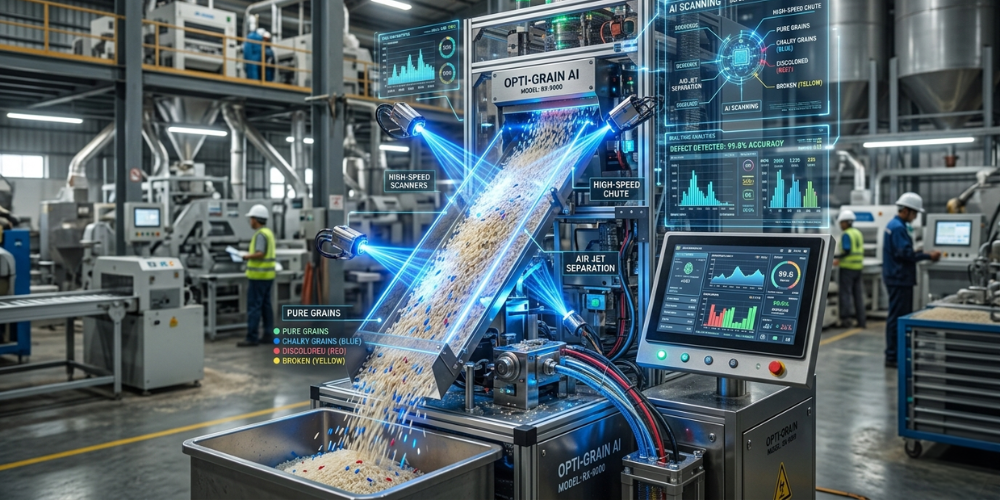
Modern Rice Color Sorters have evolved from simple "binary" filters into intelligent decision-making systems. Here is how the technology secures your supply chain:
1. Deep Learning & Computer Vision
Unlike legacy machines, AI-powered sorters use Deep Learning algorithms. The system is trained on millions of grain profiles to recognize the specific "DNA" of premium rice. It can distinguish between a natural color variation in a grain and a defect caused by heat or moisture.
2. Multi-Spectral & InGaAs Sensors
By utilizing the Infrared (IR) spectrum and InGaAs technology, these sorters can identify foreign materials that are invisible to the naked eye. A piece of clear glass or a white stone that mimics the color of rice is instantly identified and ejected.
3. High-Speed Throughput
Efficiency is key for bulk exports. Contemporary AI sorters can process up to 20 metric tons per hour with a rejection accuracy of 99.99%, ensuring that high-volume orders are fulfilled without compromising on the shipping schedule.
Strategic Benefits for Rice Importers and Distributors
Sourcing rice from mills that utilize AI-driven sorting isn't just a quality choice—it’s a strategic business move.
- Regulatory Compliance: Easily meet the stringent phytosanitary and quality standards of the FDA (USA), EU Commission, and GSO (Middle East).
- Cost Optimization: Minimize "carry-over" (the loss of good grains during the sorting process). This efficiency allows suppliers to offer more competitive pricing for Grade A rice.
- Brand Integrity: Deliver a product that requires zero re-cleaning at the destination, ready for immediate retail packaging or industrial use.
Conclusion: Securing the Future of Rice Trade
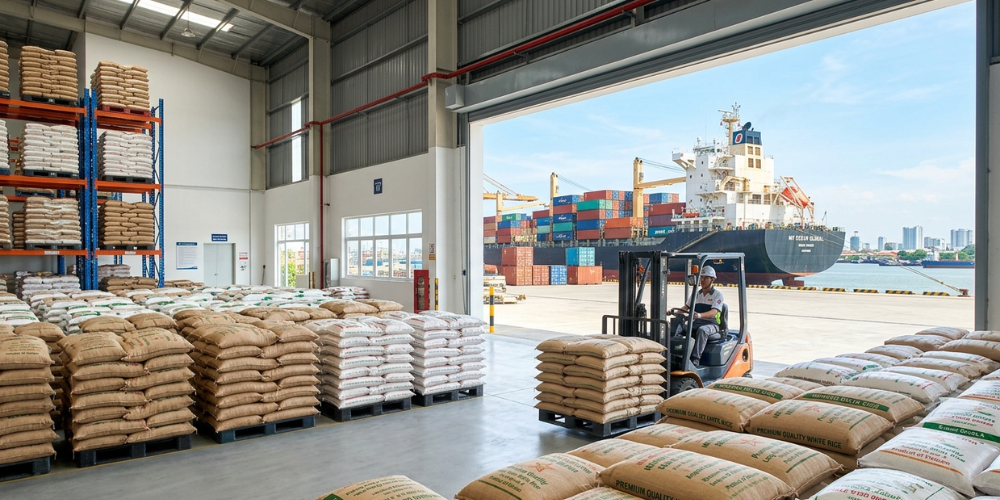
The global rice market is becoming more transparent, and the tolerance for impurity is hitting zero. For bulk rice buyers, the technological capability of the supplier's mill is now as important as the price per ton.
By prioritizing AI-driven color sorting, stakeholders in the rice supply chain are not just buying a commodity—they are investing in a guarantee of excellence that lasts from the paddy to the port.
Learn more here: Data-Driven Sourcing: Inside Vietnam’s Mega Rice Production Zones for B2B Buyers

Admin
 The Gold Standard of Purity: How AI-Driven Color Sorting is Transforming Bulk Rice Exports
Admin
https://pos.nvncdn.com/f50e22-177505/store/20250801_V0TB7mvV.png?v=1754041486
The Gold Standard of Purity: How AI-Driven Color Sorting is Transforming Bulk Rice Exports
Learn how AI-driven optical sorting revolutionizes rice quality control, ensuring 100% purity and international compliance for bulk rice exports in 2026.
Chia sẻ:
Bài viết mới nhất





Bình luận