- No. 45 N20 Road, Long Phuoc Ward, Ho Chi Minh City
- Admin@CTCinternimex.com



- Gợi ý từ khóa:
Export agricultural products, wood export, coffee export, …


Seedless Lime: Best Sizing & Packaging Guide 2026 - CTC
Seedless lime (Citrus latifolia / Persian lime) represents one of the most reliable and fast-moving citrus commodities in international commercial trade. Global fresh produce importers, supermarket procurement teams, and commercial food distributors consistently favor this variety over seeded types due to its generous juice recovery, seedless pulp, refreshing acidity, and dependable culinary performance.
However, moving fresh fruit across ocean routes requires strong coordination between farm handling and packaging execution. For volume buyers, securing a successful shipment means ensuring uniform fruit size and durable packaging that preserves freshness until final discharge. With nearly two decades of agricultural export experience, CTC Internimex JSC shares this commercial guide to help bulk buyers select the right grading and packaging solutions for Vietnamese seedless lime in 2026.
Quality in agricultural trade is proven upon arrival at destination ports. CTC Internimex prepares every shipment of seedless lime to ensure vibrant green skin, reliable juice content, and high commercial yield for our global distribution partners.
1. Commercial Sizing & Caliber Selection for Seedless Lime
International markets and retail channels have distinct consumer preferences regarding fruit counts. CTC Internimex grades fresh seedless lime into three primary commercial classes:
| Caliber Class | Fruit Count (per kg) | Visual Presentation | Recommended Trade Channels |
| Size Class L | 10 – 14 fruits/kg | Large, prominent profile | Middle East (GCC), premium wholesale markets, hotel dining |
| Size Class M | 15 – 18 fruits/kg | Balanced, uniform size | European Union and Asian supermarket retail pre-packs |
| Size Class S | 20 – 24 fruits/kg | Compact, cost-effective | Bulk food service, commercial juice extraction, beverage bars |
Quality & Freshness Criteria
Every lot of seedless lime selected for export meets clear commercial baselines:
-
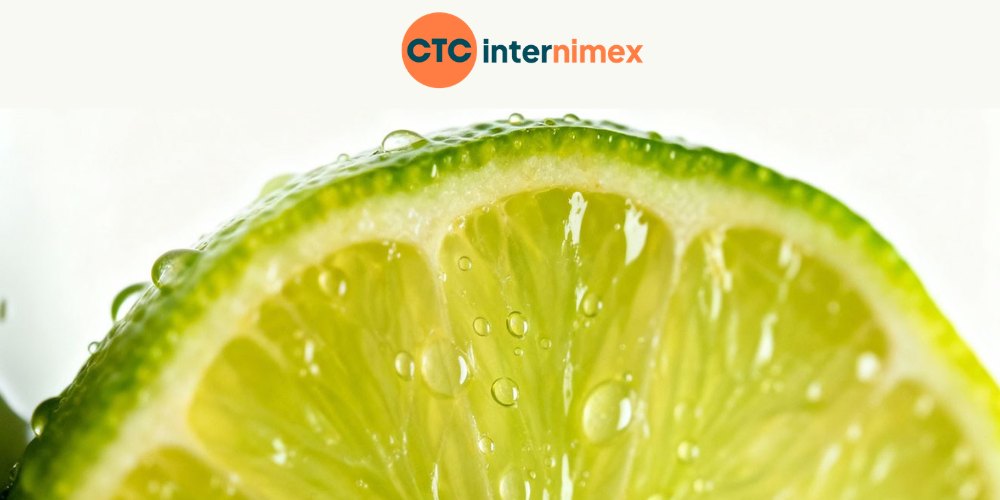
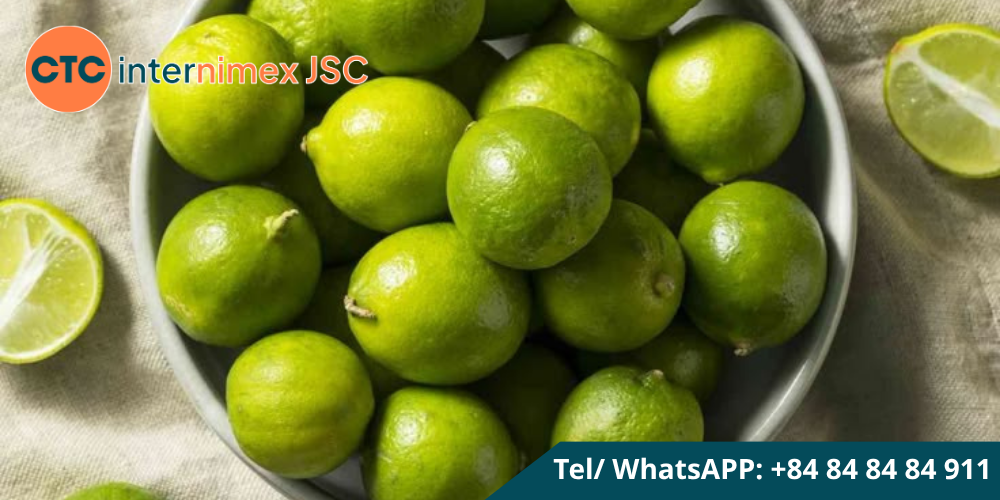
Skin & Color: Dark emerald-green peel with smooth texture; fruit showing sunburn, scarring, or yellowing is screened out during sorting.
-
Internal Pulp: Seedless, highly juicy pulp with balanced, crisp acidity.
-
Size Uniformity: Carefully calibrated to ensure consistent fruit count and weight balance throughout every carton.
Produce Quality Baseline:
Freshly harvested fruit with high natural juice content and aromatic flavor.
Firm, blemish-free rind with uniform green coloration.
Complete absence of quarantine pests and mechanical field bruises.
2. Post-Harvest Preparation & Freshness Retention
Because seedless lime is non-climacteric, its quality cannot improve after picking. Proper post-harvest handling is critical to slow down natural aging and maintain shelf life:
-
Gentle Harvesting: Fruit is hand-picked during dry conditions to avoid skin damage and bruising.
-
Sanitizing Wash & Clean Rinse: Limes pass through washing lines to clean off soil residues and clear surface spores that could cause mold during transit.
-
Moisture Elimination: Thorough air drying ensures rinds are completely dry before boxing, preventing moisture buildup inside packing cartons.
-
Protective Natural Waxing: A thin application of food-grade coating slows transpiration, locks in internal moisture, and maintains green rind vitality throughout extended maritime journeys.
3. Protective Export Packaging Configurations
Cartons traveling in maritime reefer containers must resist humid environments and stacking pressure. CTC Internimex offers adaptable packaging styles tailored to buyer specifications:
Telescopic Ventilated Cartons
-
Structure: Two-piece heavy-duty corrugated box with a separate lid fitting over the bottom tray.
-
Capacities: Commonly packed in 4kg, 7kg, and 10kg net weight formats.
-
Advantages: Double-wall side protection prevents carton collapse during multi-tier stacking and rough sea conditions.
-
Ventilation: Pre-cut air holes allow smooth circulation of chilled air to remove internal field heat.
Retail-Ready Display Trays
-
Structure: Open-top corrugated trays featuring corner stacking supports for rapid retail display.
-
Advantages: Allows immediate visual inspection at receiving warehouses and reduces unpacking labor at supermarket stores.
Consumer Mesh Bags
-
Retail Options: Pre-packed net bags (such as 500g or 1kg units) packed inside master shipping cartons.
-
Customization: Branded tags, custom barcodes, and multilingual origin labels are available for direct supermarket distribution.
Packaging Reliability Rule:
Export packaging must do more than display branding—it must support vertical stack weight and withstand cargo handling while maintaining steady ventilation for every carton.
4. Cold-Chain Management & Stowage Protocols
Protecting green citrus during long sea voyages requires stable temperature control and disciplined container stuffing:
| Stowage Component | Operational Standard | Key Protection Function |
| Reefer Container | 40ft High-Cube marine unit | Delivers continuous chilled airflow across the cargo floor. |
| Pallet Loading | 20 to 21 pallets per 40ft reefer | Structured pallet patterns prevent cargo shifting during transit. |
| Pallet Protection | Corner boards and perforated wrap | Secures carton alignment while allowing free airflow between boxes. |
| Ceiling Clearance | Maintained below container red line | Prevents airflow blockages and ensures consistent temperatures. |
Temperature & Atmosphere Balance
-
Temperature Stability: Fresh limes are transported under controlled cool temperatures to keep fruit dormant without causing chilling injuries or skin browning.
-
Air Exchange: Container fresh-air vents remain open to expel naturally occurring respiration gases and maintain air freshness.
-
Journey Visibility: Temperature data loggers are included inside shipments to track and verify unbroken cold-chain conditions from our packing house to your warehouse.
Cold-Chain Transport Rule:
Maintaining a stable cool temperature preserves the natural green rind of seedless lime. Consistent air circulation prevents warm pockets, keeping fruit fresh throughout the voyage.
5. Quality Compliance, Traceability & Export Clearance
International trade in fresh fruit requires strict compliance with food safety and import regulations. CTC Internimex ensures every consignment of seedless lime is backed by complete documentation:
-
Traceable Farms: Sourced from registered growing areas with valid Planting Unit Codes (PUC) following GlobalGAP agricultural practices.
-
Independent Third-Party Inspection: Consignments can be inspected before departure by trusted agencies such as SGS, Vinacontrol, or Intertek to verify weight, grading, and phytosanitary clearance.
-
Chemical Safety Compliance: Managed responsibly to meet standard pesticide residue limits (MRLs) required by importing authorities.
-
Customs Ready (HS Code 0805.50.00): Exported under standard international citrus classifications for clear customs entry.
Commercial Inspection Assurance:
Buyers have the option to appoint independent third-party inspectors prior to container sealing. Full sets of clean commercial invoices, packing lists, Phytosanitary Certificates, and Certificates of Origin are delivered promptly to ensure smooth import clearance.
6. Commercial Advantages of Sourcing with CTC Internimex
With nearly 20 years of hands-on agricultural processing and international export experience, CTC Internimex JSC provides a dependable partnership for global importers:
-
Reliable Year-Round Volume: Strong integration with farming cooperatives across major lime-growing regions ensures consistent weekly container shipments without seasonal breaks.
-
Versatile Incoterms 2020: Supporting diverse shipping terms to match your logistics model: FOB, CIF, CFR, EXW, and DDP.
-
Direct Logistics Execution: Close relationships with major ocean shipping lines help secure competitive ocean freight rates and dependable container space.
-
Flexible Payment Solutions: Offering secure, widely accepted international payment options including Telegraphic Transfers (T/T) and Irrevocable Letters of Credit at sight (L/C at sight).
7. Simple 4-Step B2B Procurement Process
CTC Internimex provides an organized, transparent purchasing workflow for international buyers:
| Procurement Step | Operational Focus | Action Item |
| Step 1: Inquiry & RFQ | Requirement gathering | Buyer shares preferred size class (L/M/S), box style, volume, and destination port. |
| Step 2: Commercial Quotation | Offer & sample dispatch | CTC Internimex submits an itemized quotation; fresh fruit samples can be sent by air. |
| Step 3: Contract Ratification | Agreement & harvest | Both parties confirm shipment schedules, payment terms, and packaging artwork. |
| Step 4: Stuffing & Documentation | Inspection & dispatch | Fruit is graded, packed, inspected, loaded into reefer containers, and documents are released. |
8. Connect with CTC Internimex for Bulk Seedless Lime
Whether securing programmatic weekly container schedules or tailored private-label consignments, partnering with CTC Internimex JSC guarantees reliable year-round supply, full compliance with international phytosanitary baselines, and flexible commercial settlement solutions under Incoterms 2020. Contact our trade specialists today to align on target grading parameters, inspect our latest packing house audit credentials, and lock in volume-based procurement terms.

Admin
 Seedless Lime: Best Sizing & Packaging Guide 2026 - CTC
Admin
https://pos.nvncdn.com/f50e22-177505/store/20250801_V0TB7mvV.png?v=1754041486
Seedless Lime: Best Sizing & Packaging Guide 2026 - CTC
Seedless lime sizing and export packaging guide for bulk buyers 2026. GlobalGAP certified, cold-chain ready by CTC Internimex. Inquire!
Chia sẻ:
Bài viết mới nhất




Bình luận